
If an enterprise customer has ever sent you a security questionnaire — or flat-out asked "Are you ISO 27001 certified?" — you already know why this standard matters. For startups and SMBs, ISO 27001 has quietly become the price of entry for selling to larger organizations. The good news: it's far more achievable than most founders think.
What is ISO 27001, really?
ISO/IEC 27001 is the leading international standard for information security management. Rather than dictating specific tools, it asks you to build an Information Security Management System (ISMS): a documented, repeatable way of identifying risks to your data and systems and managing them over time.
Certification means an accredited, independent body has audited your ISMS and confirmed it meets the standard. Because it's issued under the IAF (International Accreditation Forum), that certificate is recognized worldwide — which is exactly why global customers trust it.
Why startups get asked for it
- It unblocks deals. Procurement and security teams often require ISO 27001 before they'll sign.
- It shortens security reviews. A certificate answers dozens of questionnaire items at once.
- It builds trust. It signals that security is a habit, not an afterthought.
- It scales with you. The same ISMS supports SOC 2, GDPR and NIS2 later.
What's inside an ISMS?
A right-sized ISMS for a startup typically includes a scope definition, a risk assessment and treatment plan, a Statement of Applicability (SoA), and a set of policies and procedures covering access control, vendor management, incident response, secure development and more. In our engagements, that's delivered as a complete, customized package — around 62 documents tailored to how your team actually works, not generic templates you'll never read.
The certification process, step by step
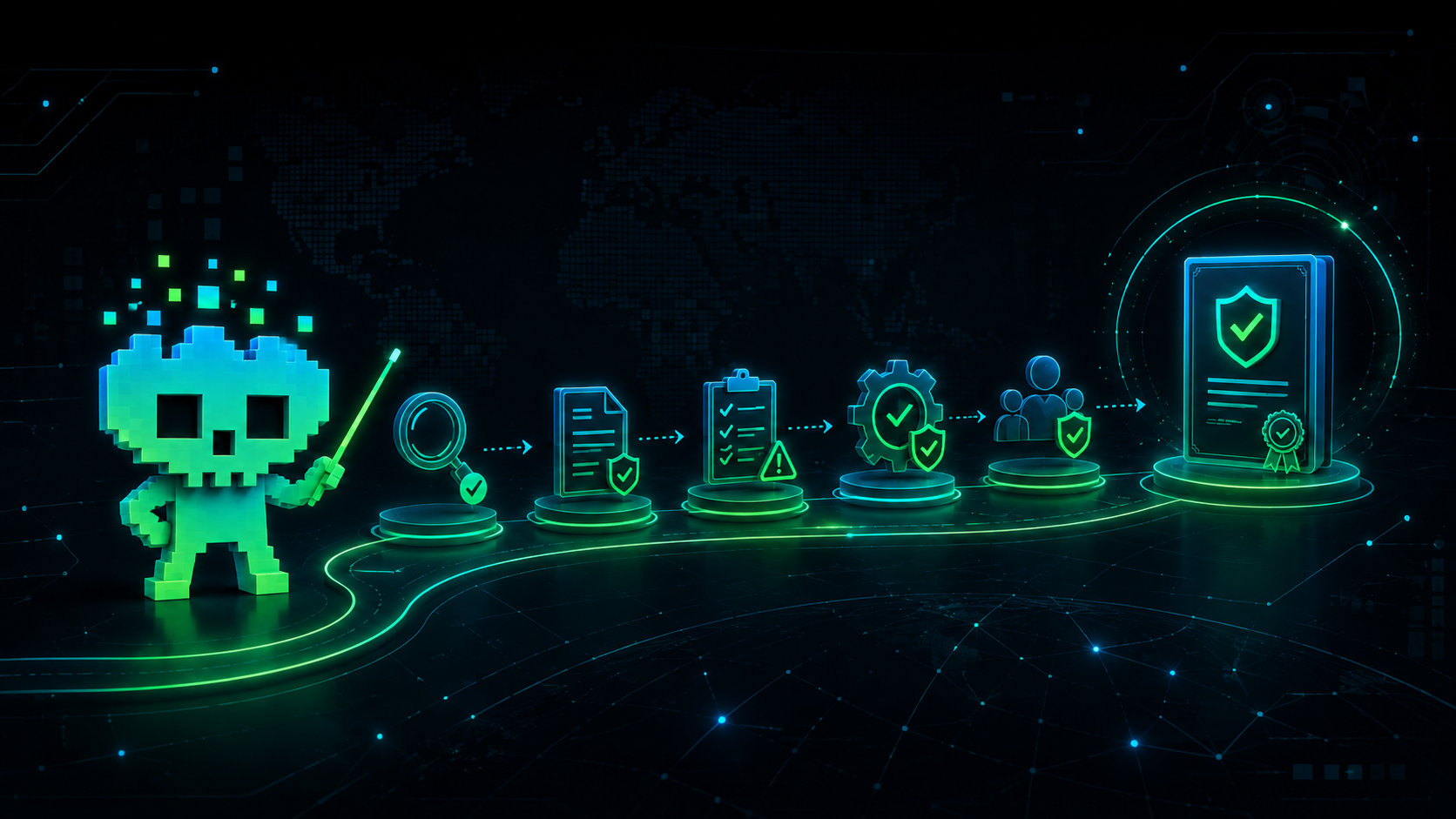
- Preparation. A GAP analysis maps where you are today against the standard.
- Planning & design. Define scope, risk methodology and the policies that fit your business.
- Implementation. Build the ISMS, risk register and Statement of Applicability, and put controls into practice.
- Evaluation & certification. An internal audit, then the registrar's Stage 1 and Stage 2 audits — ending in your certificate.
How long does it take?
The honest answer is "it depends on scope and how quickly you can review documents" — but it does not have to take the better part of a year. With a fully managed approach and automation for evidence collection, many small teams reach certification in a matter of weeks. Speed comes from removing the two biggest time sinks: reinventing documentation and chasing evidence manually.
You don't need complicated platforms or endless consulting hours to get certified. You need a clear scope, the right documents, and someone who has done it before.
Staying certified
ISO 27001 runs on a three-year cycle: surveillance audits at months 12 and 24, and re-certification at month 36. The ISMS is meant to be lived, not filed away — as you add staff, cloud regions or new products, you keep it current. That's also where continuous-compliance tooling earns its keep, automating access reviews, vendor risk and evidence so audits stop being fire drills.
Getting started
If customers are asking for ISO 27001, the fastest path is to talk to someone who can scope it accurately and manage the heavy lifting for you. Learn more about our ISO 27001 certification service, or book a free consultation and we'll map your quickest route to certified.